How Small Businesses Use Facebook Groups to Get Clients (Without Ads)
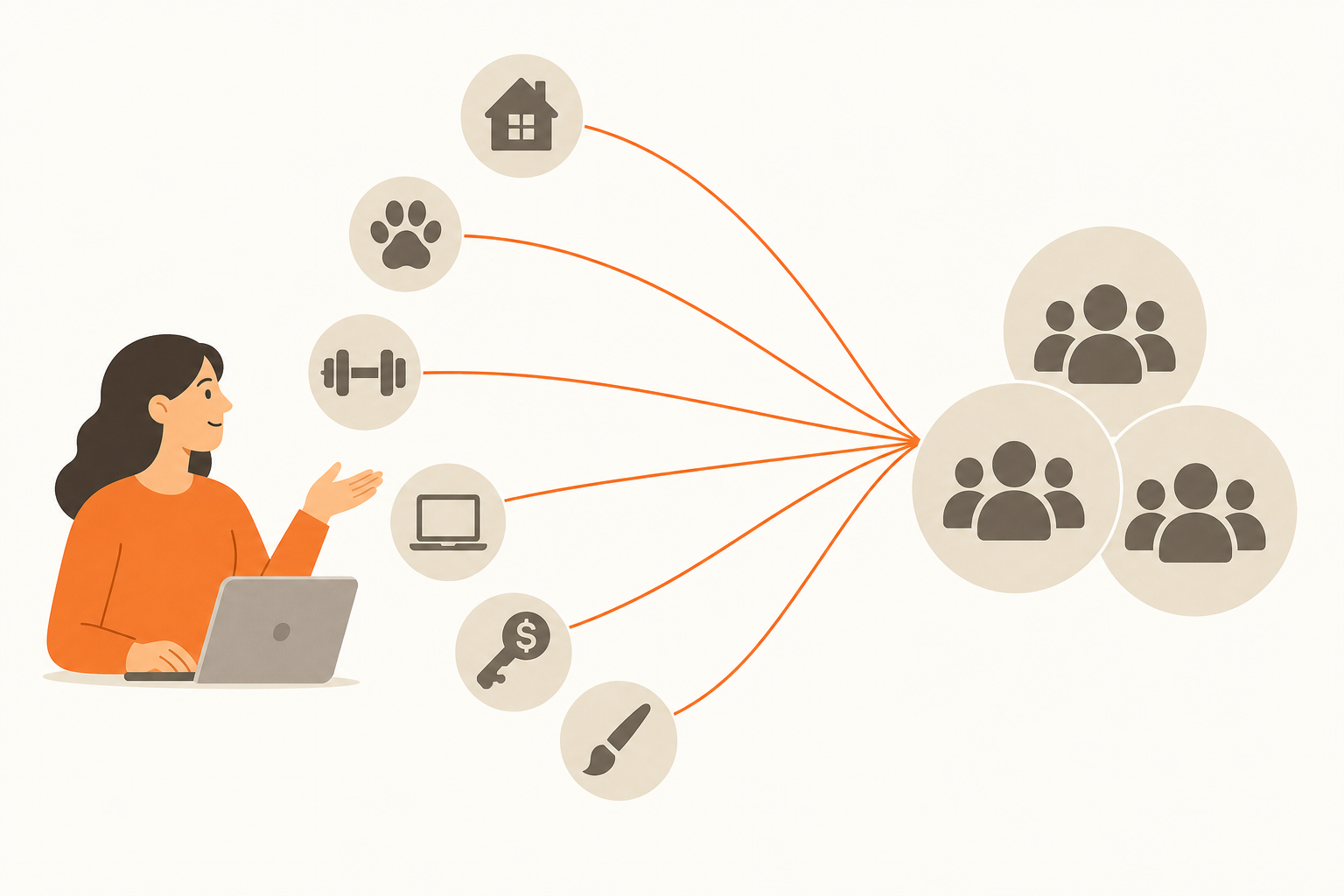
Yes, small businesses get real clients from Facebook groups. The pattern is consistent across industries: post something genuinely useful in groups where your ideal customers already spend time, vary the message across groups, show up at least weekly, and let conversations convert rather than pitches. The businesses doing this at scale are not posting manually to hundreds of groups. They automate distribution and handle engagement personally. The result is warm inbound leads at close to zero cost.
There is a gap between what most small businesses are doing on Facebook and what the businesses getting clients from it are doing.
The majority post promotional content to their own Page, watch it reach 2-4% of followers, and conclude that organic Facebook is dead. The minority post useful content into active Facebook groups where their customers are already gathered, reach 30-60% of group members, and get DMs from people who found them through that content.
This post is about the second group. Concrete examples of what businesses across different industries actually post, which groups they target, and why the model works at the income levels where paid ads are either unaffordable or don’t pencil out. The specific industries here are illustrative, not exhaustive — the underlying approach works in most niches where customers gather in communities.
Why Groups Beat Pages for Small Business Reach
Facebook Pages get algorithmic reach. Groups get notification reach. When someone posts in a group they’re active in, Facebook often notifies other group members directly. That notification behavior is why groups consistently deliver 10 to 30 times more organic visibility than a Page post to the same number of followers.
For a small business owner with a tight marketing budget, this matters concretely. A Facebook ad campaign with a $500/month budget might generate 10-15 qualified leads depending on the niche. The same 10-15 hours spent posting useful content in relevant groups can generate the same number of leads, at zero media cost, with a compounding effect: each post builds your visible presence in that community, so future posts perform better.
That equation does not hold at every scale or in every industry. For businesses running $20k/month in ad spend, group marketing is a supplement, not a replacement. But for the business owner who is good at what they do and has more time than ad budget, groups are often the highest-ROI channel available.
Facebook Pages average 2-6% organic reach on posts. Facebook groups regularly deliver 20-60% reach to active members. For a 5,000-member group, a single post can be seen by 1,000-3,000 people who have self-selected into a topic that's directly relevant to your business. That is a different kind of audience than someone who saw your Page in their feed three years ago and forgot they followed it.
1. Real Estate Agent
A real estate agent in a mid-size city joined 40 local Facebook community groups: neighborhood groups, “things to do in [city]” groups, local parents groups, home improvement groups, and a handful of “moving to [city]” groups. She did not join them to post listings.
Her weekly posting rotation looks like this: two posts per week, spread across different groups each time, on a schedule that hits each group roughly once every three weeks. The posts are never listings. They are market updates (“Here is what homes sold for in the Riverside neighborhood last month, and what that means for buyers right now”), neighborhood guides (“The three things nobody tells you about buying in the Westside”), and practical advice (“What to do if your house appraises below asking price”).
Each post ends with a soft close: “Happy to answer questions in the comments, or DM me directly if you want to talk through your situation.”
The DMs she gets are not from people browsing for agents. They are from people who read her post, trusted what she wrote, and concluded she knows what she’s talking about. That is a different starting position than a cold ad impression from someone who has never heard of her.
At 40 groups, doing this manually would take 8-10 hours per week. She uses a Facebook group auto poster to schedule and distribute posts, spending about 2 hours per week on content and the rest on conversations.
2. Dog Groomer
A dog groomer running a small two-chair shop joined every pet-related group in her metro area: local dog owner groups, breed-specific groups, “dog friendly [city]” groups, and neighborhood community groups. About 60 groups in total.
Her content is simple: before-and-after photos of grooming results, seasonal tips (“signs your dog needs a deshedding treatment before summer”), and answers to common grooming questions she sees asked in groups (“how often should a golden retriever actually be groomed”). She never posts a price list or a “book now” link in the post body. The link is in the first comment.
The referral behavior in local pet groups is strong. When a dog owner sees a grooming result and asks “who did that?”, the comments turn into a recommendation thread. She has been tagged in conversations she was not part of because previous clients recognized her work and mentioned her.
Her booking calendar has been full with a waitlist for eight months. She spends no money on Facebook ads.
3. B2B SaaS Founder
A founder running a project management tool for architecture firms identified 15 Facebook groups where architects, interior designers, and construction project managers gather. These are professional groups with strict no-promotion rules.
His posts are exclusively educational: “The three-phase approval process that eliminates revision cycles on commercial projects”, “How to handle scope creep when the client keeps expanding the brief”, “What actually belongs in a project handoff document”. No mention of his product in the post body.
His profile links to his tool. His bio says “I build project management software for architecture firms.” Anyone who reads his posts and finds them useful can connect the author to the product in one click.
The conversion path is slow but highly qualified: someone reads a post, finds it useful, reads more of his posts over the following weeks, clicks his profile, signs up for a trial. Trial users who came this way convert to paid at a higher rate than any other acquisition channel he runs, because they already trust his knowledge before they see the product.
At 15 groups posting weekly, this is manageable manually. He does it without automation. The bottleneck for him is content, not distribution. But the architecture of the approach is the same one that scales: useful content in the right groups, no pitch, let the profile do the conversion work.
4. Online Fitness Coach
An online fitness coach runs a coaching practice serving working parents who want to lose weight without a strict diet. She targets Facebook groups in three categories: parenting groups in major cities, general health and wellness groups, and busy professional groups.
Her content rotates through three formats. Tactical tips: “The 15-minute bodyweight circuit that works in a hotel room, your office, or a living room with kids underfoot.” Personal observations: “I have coached 200 clients over three years. The ones who actually keep the weight off share one habit that has nothing to do with diet.” Myth-busting: “The reason most people plateau after six weeks of clean eating.”
She posts to 80 groups per week, spread across a posting schedule that hits each group roughly every two weeks. Manual posting at that scale would take most of a working day. She runs automated campaigns that handle distribution and spends the time she saves on the DM conversations that turn into clients.
Her client acquisition cost is the monthly subscription to her posting tool. The content is her own expertise, which she would be producing anyway. The groups are free to join. For a coach whose coaching packages run $300-500/month per client, acquiring one client per week from groups more than covers her total marketing spend.
The fitness coach's three-format rotation (tactical tip, personal observation, myth-bust) is not accidental. Each format attracts a different reader psychology. Tactical tips attract people ready to act. Personal observations attract people who relate to the struggle. Myth-busting attracts skeptics who respond to being told something counterintuitive. Rotating through all three means her posts resonate with different segments of the same groups over time. This is one of the 10 Facebook group post formats that consistently get engagement.
5. Mortgage Broker
A mortgage broker posts in real estate investor groups, first-time homebuyer groups, and local community groups in his region. His posts are rate commentary and process explanations: “What this week’s rate movement actually means for buyers who are pre-approved right now”, “Why some lenders are faster than others and how to tell before you commit”, “Three questions to ask your mortgage broker that most people never ask.”
He does not post his rates. He posts analysis and context around rates. The distinction matters because posting rates looks like an ad; posting analysis of rates looks like expertise.
Each post generates 2-5 DMs on average. Not all of them are serious buyers. Some are people who are 6-12 months from buying and just curious. He treats those conversations the same way: answer their questions fully, add them to a follow-up sequence, and be the broker they remember when they are ready.
His conversion window is longer than the fitness coach’s, because mortgage decisions take longer. But the lead quality is consistently higher than any paid lead source he has tried. People who found him through his group posts already understand that he knows more than the average broker before they pick up the phone.
6. Freelance Graphic Designer
A freelance designer specializing in brand identity for small businesses posts in entrepreneur groups, small business owner groups, and industry-specific communities where his target clients gather. His content is a mix of design critique (with permission from public examples), practical advice for non-designers, and portfolio pieces framed as case studies rather than portfolio showcases.
The framing is important. “Look at this logo I designed” is a promotion. “Here is how we solved a packaging problem for a food startup with a $3,000 budget and a two-week timeline, and what the brief actually said” is a case study that provides real value to other business owners trying to solve similar problems.
He gets hired by people who read his case studies and recognize their own situation in the problem he describes. “That’s exactly our problem” is a much warmer starting point for a sales conversation than “I saw your ad.”
The Pattern Across All Six
Different industries, different content formats, different group types. But the mechanics are identical in every case:
Useful content, not promotional content. Every one of these business owners posts things that would help their target customer even if they never bought from them. This is not generosity for its own sake. It is the only thing that works in community spaces where promotional posts get ignored or removed.
Groups where customers already gather, not their own groups. Building your own Facebook group is a different, slower strategy. Posting in established groups means an existing audience is there before you arrive.
Consistency over volume. Showing up in the same groups every few weeks, posting quality content each time, builds a recognizable presence. Sporadic posting builds nothing.
Message variation across groups. The same post word-for-word in 40 groups in one day is a spam pattern. The same core idea expressed differently in each group, spread over a week, is a content distribution strategy. This is where spintax and AI variation become operationally important at scale.
Human follow-up on every response. The post is the fishing line. The DM conversation is where the client is actually landed. None of these businesses automate their responses.
Why Automation Changes the Math at Scale
Posting to 5 groups per week manually is a 30-minute task. Posting to 80 groups per week manually, with varied messages, on a schedule that avoids hitting the same group too frequently, is a half-day task that requires tracking what you sent where and when.
The businesses getting the most from this model are using tools that auto post to Facebook groups with built-in message variation and delay controls. The content still comes from them. The distribution runs automatically. This separation (automated reach, human engagement) is what makes the model viable at the scale where results become consistent rather than occasional.
NinjaPoster’s auto-post to groups feature and organic multi-group posting are both designed specifically for this workflow. You set up the campaign, configure the delays and variation, and the posts go out while you focus on the conversations that actually turn into clients.
| Manual posting | Automated posting | |
|---|---|---|
| Time per week (50 groups) | 4-6 hours | 30-60 minutes (content only) |
| Groups reached | Limited by time | No practical ceiling |
| Message variation | Often skipped (copy-paste) | Built in (AI or spintax) |
| Posting schedule | Irregular (when you have time) | Consistent (campaigns run on schedule) |
| Per-group frequency control | Tracked manually or forgotten | Configured per campaign |
| Scalability | Hits a ceiling fast | Scales with your group list |
The businesses generating the most consistent inbound from groups are running at 80-200 groups per week. That volume is not achievable manually, and attempting it manually leads to the spam patterns (identical posts, too fast, no variation) that get accounts flagged. Automation done properly is what makes it both scalable and safe.
The full guide on posting to multiple Facebook groups safely covers the specific settings that matter: delay ranges, per-group frequency, and how variation protects accounts at high volume.
The mortgage broker posting the same text to 80 groups on the same day is not running the same strategy as the mortgage broker who varies the message and spreads posts across a week. Facebook's spam detection catches pattern repetition. The businesses getting results at scale treat each group as a distinct audience, not a slot in a distribution list. The posting schedule guide covers the timing side of this in detail.
- Facebook groups deliver 10-30x more organic reach than Pages for the same audience size, because groups trigger notification reach rather than algorithmic reach.
- The six business types covered (real estate, pet services, B2B SaaS, coaching, mortgage, and design) all follow the same model: useful content in groups where their customers already gather, no pitch in the post body, conversion through follow-up conversations.
- Content framed as analysis, case study, or practical advice outperforms content framed as promotion in almost every group context. Group members share and engage with useful content. They scroll past ads.
- Consistency matters more than volume per post. Showing up in the same groups monthly with quality content builds a recognizable presence. One strong post every three weeks per group beats 10 spammy posts.
- At 80+ groups per week, manual posting becomes the bottleneck. Businesses generating consistent leads at that scale automate distribution and focus human time on engagement.
- Message variation is not optional at scale. Identical posts across many groups is a spam pattern. AI variation or spintax makes variation automatic.
- The conversion happens in the DM, not the post. Automate the reach. Keep the relationship human.
Related Reading
- How to Get Leads and Clients from Facebook Groups (The Conversion Guide)
- The Facebook Group Marketing Strategy That Actually Works in 2026
- 10 Facebook Group Post Templates That Actually Get Clicks
- Facebook Group Posting Schedule: Best Times and Frequency for 2026
- 5 Best Facebook Group Auto Posters in 2026 (Tested and Compared)
Ready to automate your Facebook group marketing?
NinjaPoster posts to hundreds of joined groups automatically, safely and organically. $37/month. 7-day refund on your first payment.
