Facebook Group Posting Schedule: Best Times and Frequency for 2026
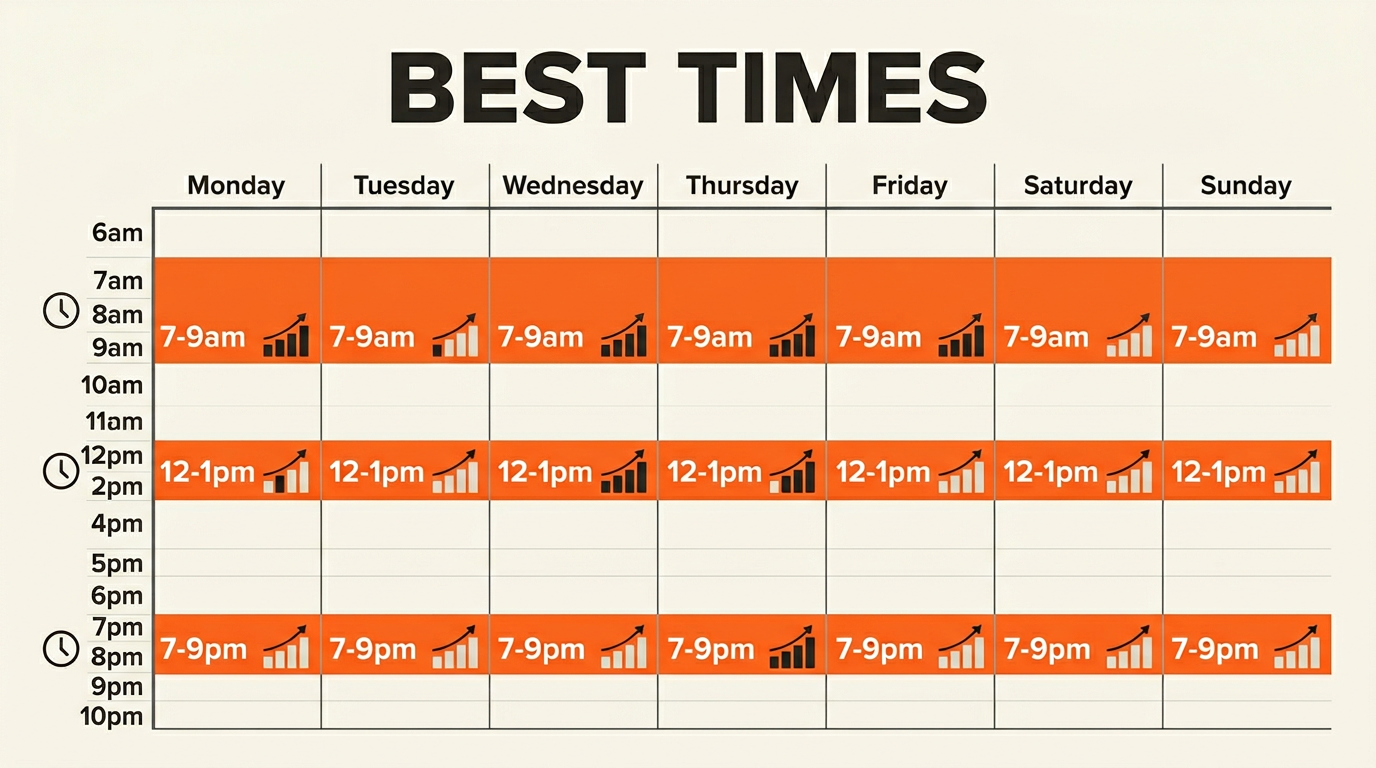
The best times to post in Facebook groups are weekday mornings (7-9am), weekday lunch (12-1pm), and evenings (7-9pm) in your target audience's local timezone. Post to any single group no more than once every 3-5 days to avoid looking spammy. For large campaigns across 100+ groups, stagger posting over multiple sessions throughout the day rather than firing everything in one burst.
Most Facebook group marketers have the content figured out. They’re writing good posts, targeting the right groups, and getting some results. Where they underperform is timing and frequency.
Posting the right content at the wrong time, or to the same group too often, leaves a lot of engagement on the table. This guide covers what the data shows about when group members are most active, how to think about frequency, and how to structure a posting schedule for campaigns at any scale.
Why Timing Matters More in Groups Than on Pages
When you post to a Facebook Page, your post competes with the entire news feed algorithm. Timing matters, but the algorithm buffers the timing somewhat — a post from 8am might still surface at 11am if Facebook thinks you’d find it relevant.
Groups work differently. Group posts appear in a member’s notifications and, more importantly, they appear at the top of the group feed for recently active members. New posts push older posts down. In active groups, a post from 8am might be 10 posts down by 10am.
This means posting time in groups has a much more direct impact on initial visibility than it does for Pages. Members who check the group in the first 30 minutes after your post go live are the ones most likely to see it prominently. If that window overlaps with when they’re actually on Facebook, your engagement numbers jump significantly.
Page posts are distributed by Facebook's algorithm based on follower affinity. Group posts are distributed by recency within the group feed and by notification settings. This makes timing significantly more impactful for group posts. Understanding this difference changes how you schedule your campaigns.
Best Posting Times by Day
The following time windows consistently produce higher engagement across general interest, business, and buy-sell Facebook groups. All times should be interpreted in your target audience’s timezone.
| Time Window | Why It Works | Best For |
|---|---|---|
| Weekdays 7-9am | Pre-work browsing, coffee scrolling habit | All group types |
| Weekdays 12-1pm | Lunch break peak activity | B2C, local, community groups |
| Weekdays 7-9pm | Post-dinner peak, highest total daily active users | All group types, especially lifestyle and buy-sell |
| Saturday 9-11am | Weekend morning browsing, no commute distraction | Lifestyle, community, hobby groups |
| Sunday 6-8pm | Pre-work-week anxiety period, high engagement on solution-focused content | Business, marketing, career groups |
The lowest-performing windows: Tuesday-Thursday 2-4pm (mid-afternoon work focus) and all day Saturday before 9am. These are not hard rules but patterns worth aligning with when you have flexibility.
Frequency: How Often to Post Per Group
This is where most multi-group campaigns go wrong. People post to their best-performing groups multiple times per week because they’re seeing results. This backfires in two ways:
Group admins notice and remove your posts. If you’ve posted three times this week to the same group, you’re visible. Admins track repeat promoters. One removal from a high-value group is a bad outcome.
Facebook’s algorithm flags repeated posting patterns. If the same account posts to the same group with identical timing every Tuesday at 8am, the pattern becomes detectable. Natural human behavior is irregular.
The sustainable posting frequency:
- Any single group: Once every 5-7 days maximum. Every 3 days is pushing it for promotional content.
- Across your full group list: Daily campaigns are fine as long as each individual group receives posts infrequently.
- New accounts or accounts with no history in a group: Wait 7-14 days after joining before posting for the first time. Post once, then wait 10+ days before posting again.
Building a Weekly Posting Schedule
For a campaign targeting 150 groups, a structured weekly schedule looks like this:
Monday, Wednesday, Friday — Morning sessions (7-9am): Post to 30-50 groups per session. These are your primary posting days. Use your strongest post variations for these sessions since morning engagement windows are high-value.
Tuesday, Thursday — Evening sessions (7-9pm): Post to a different set of 30-40 groups. These groups don’t overlap with Monday/Wednesday/Friday groups, so no group gets hit twice in the same week.
Saturday morning (optional): Lifestyle, community, and buy-sell groups perform well on Saturday mornings. If your audience segments include these group types, a smaller Saturday session (20-30 groups) captures weekend engagement you’d otherwise miss.
Sunday — No posting: Give accounts a rest day. Human patterns include natural breaks. Posting 7 days per week with perfect regularity is a flag.
This structure gets 150+ groups covered in a week with every group receiving at most one post every 7-10 days and no session overwhelming Facebook’s rate limits.
Posting 200 times in 30 minutes is an instant red flag. Posting 200 times over 6 hours with randomized 60-120 second delays between posts is a normal browsing and engagement pattern. Always use delay settings in your posting tool. The guide on posting to multiple groups safely covers the exact delay settings that work.
Adapting Schedule to Group Activity Level
Not all groups have the same activity level, and your timing strategy should reflect this.
High-activity groups (50+ posts per day): These groups move fast. Post during the morning window when members are most active and the feed isn’t yet flooded. Posting at 11am means you’re buried by noon.
Medium-activity groups (10-50 posts per day): More flexibility. Any of the three primary windows works. Evening posts perform well here because the feed is moderately busy but your post has more staying power.
Low-activity groups (under 10 posts per day): Timing matters less. Your post stays visible for hours regardless. However, still aim for the primary windows to capture the small burst of activity these groups do get.
Identify activity level before your first post. Check when the last 10 posts were published. If they span 3 days, that’s a low-activity group. If they span 3 hours, it’s high-activity. This takes 20 seconds and changes your posting time decision.
Timezone Targeting for Multi-Region Campaigns
If your groups span multiple timezones, posting at 8am Eastern means you’re posting at 5am Pacific — a much weaker window for West Coast members. For campaigns targeting US audiences across multiple timezones:
- Post to Eastern-heavy groups in your 7-9am EST window
- Post to Central and Mountain groups in a 9-10am EST window (7-8am their time)
- Post to Pacific-heavy groups in an 11am-12pm EST window (8-9am their time)
This requires knowing the geographic concentration of your group’s members, which you can estimate from group descriptions, admin locations, and the general topic (a local business group in Atlanta is obviously Eastern-heavy).
For international campaigns, separate your groups by region and run region-specific posting sessions timed to each region’s peak hours.
A dedicated Facebook group posting tool like NinjaPoster makes this practical — you can create separate campaign lists for each timezone region and schedule sessions for each.
Testing Your Schedule
Every audience is different. The windows above are starting points, not final answers. After 30 days of consistent posting, review your data:
- Which sessions generated the most comments and DMs?
- Which days saw the most link clicks (if tracking)?
- Which groups generated the best responses regardless of when you posted?
Move more of your posting volume into the sessions that performed best. Reduce or eliminate sessions that consistently underperformed. After 60 days of this refinement process, you’ll have a posting schedule tuned specifically to your audience and group list rather than generic industry benchmarks.
- Group posts are ranked by recency, not algorithm affinity. Timing has a more direct impact on engagement in groups than it does on Pages.
- Best windows: weekday mornings 7-9am, lunch 12-1pm, evenings 7-9pm. Saturday mornings work well for lifestyle groups. Sunday evenings work for business-focused groups.
- Post to any single group no more than once every 5-7 days. Repeat posting to the same group is the fastest way to lose access to high-value groups.
- Build a weekly schedule that rotates across your full group list so no group gets hit twice in the same week.
- Use randomized delays between posts (60-120 seconds). Regular machine-like intervals are detectable. Irregular human-like intervals are not.
- Adjust timing based on group activity level. High-activity groups need early-window posts to avoid getting buried.
- For multi-timezone campaigns, segment your group list by region and run separate sessions timed to each region's morning window.
Related Reading
Ready to automate your Facebook group marketing?
NinjaPoster posts to hundreds of groups automatically — safely and organically. Start your 7-day trial today.